Sculptra in Rapid City, SD
At LiveWell Medical Aesthetics in Rapid City, SD, Sculptra is one of our most requested treatments for patients who want gradual, long-lasting improvement in facial volume, texture, and crepiness without the immediate change of a traditional filler. Sculptra is a biostimulator, meaning it works by stimulating your body to produce its own collagen — instead of adding a gel to your face. Results build naturally over 3 to 6 months and can last 2 years or longer.
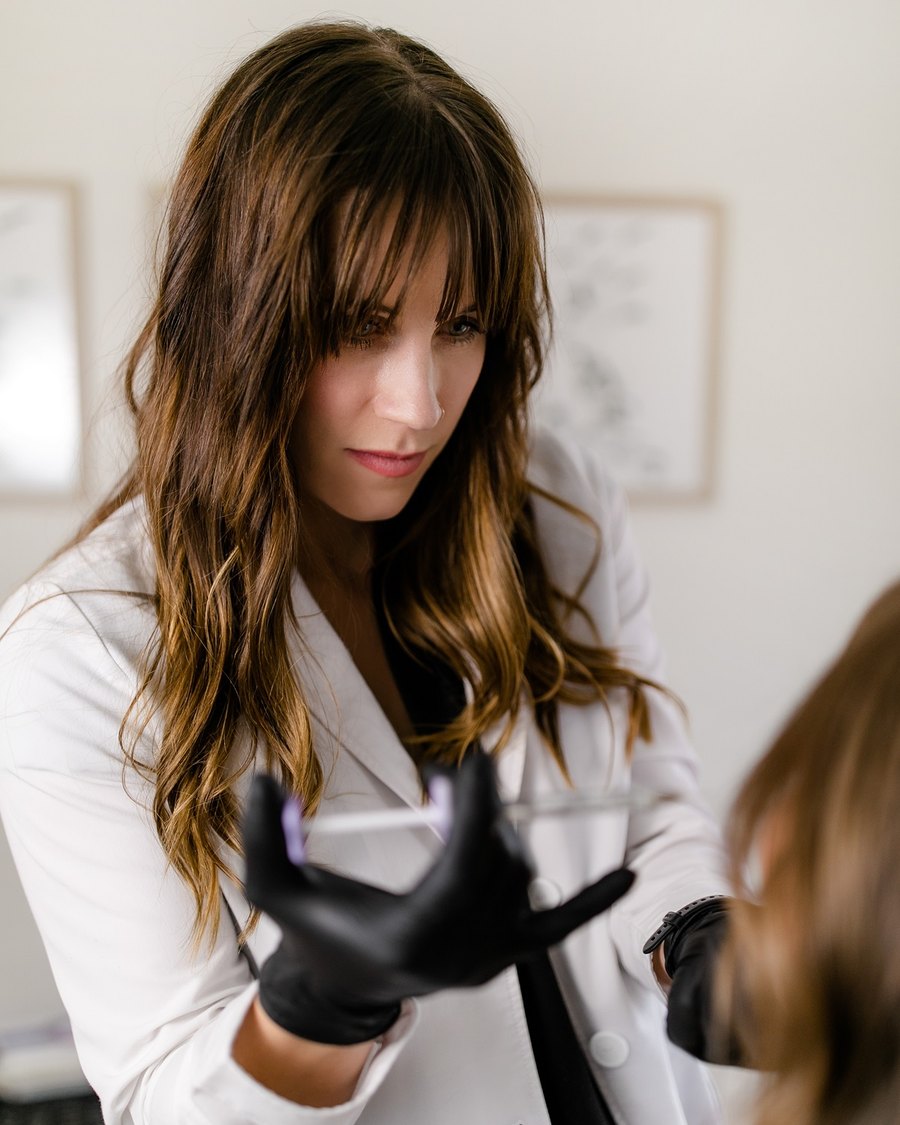
Sculptra is performed by Courtney Vesely, FNP-C, Marie Patton, CNP, and Christa McCormick, RN. Courtney has a total of 10 years injecting and over 13 years in the industry. Together, they have over 20 years of experience in aesthetics. As providers, they like to utilize the body’s ability to produce new collagen to create natural, long-lasting improvements.
Sculptra vs. Dermal Fillers: What Is the Difference?
The most common question patients ask before a Sculptra consultation is whether it is the same as a dermal filler. The short answer is no; and the difference matters.
Physically add volume to the treated area. Results are visible immediately. They are fully reversible and typically last 12 to 24 months depending on the product and the area. They are an excellent choice for patients who want an immediate result or a modest, targeted correction.
It does not add volume directly. Instead, it is made of poly-L-lactic acid (PLLA), a biocompatible synthetic substance that, when injected, triggers a controlled inflammatory response that stimulates your body to produce new collagen. Over the following months, that new collagen gradually fills in volume loss and improves skin texture and firmness. There is no immediately visible filler effect; results develop progressively.
Sculptra is the right choice for a patient who wants to look naturally younger over the next several months, with results that hold for 2 years or longer.
How Sculptra Works
Sculptra is made of poly-L-lactic acid (PLLA), a synthetic but biocompatible material that has been used safely in medical applications for decades, including dissolvable sutures. When injected, PLLA microparticles trigger a controlled response from the surrounding tissue.
Over the following weeks, your body gradually breaks down the PLLA particles. As it does, it lays down new collagen around and between them. This new collagen is your own; it is not a foreign substance being held in place. It is structural scaffolding your body has built.
The collagen continues to build over 3 to 6 months after each session, which is why results look so natural. No one sees a sudden change; just a gradual, refreshed appearance that accumulates over time.
Sculptra is FDA-approved and has been available in the United States since 2004. It is one of the most studied injectable biostimulators available.
Where Sculptra Can Be Used
Sculptra is primarily used in areas of the face where volume loss creates an aged or hollow appearance:
Volume loss in the cheeks is one of the earliest and most significant signs of facial aging. Sculptra rebuilds the structural collagen in this area over time, restoring the lift and fullness that makes the face look younger.
Hollowing in the temples creates a gaunt, skeletal appearance that age-management skincare cannot address. Sculptra in the temples restores a more youthful oval facial shape.
Sculptra can improve the definition of the jawline and slow the appearance of jowling by restoring collagen density in the lower face.
While not typically used as a direct fold filler, Sculptra improves the overall volume loss in the mid and lower face that causes these folds to deepen.
Some patients use Sculptra not for specific volume correction but for a global improvement in skin texture, firmness, and elasticity; particularly when significant collagen depletion has occurred.
Your injector will assess your specific anatomy at your consultation and recommend the areas and volume most appropriate for your goals and your face’s structure.
What the Sculptra Treatment Plan Looks Like
Most patients see optimal results from a series of 2 to 3 Sculptra sessions, spaced 4 to 6 weeks apart. The number of sessions and vials used at each visit depends on the degree of volume loss and the areas being treated. Your provider will outline a personalized plan at your consultation.
Sculptra is mixed with sterile water and lidocaine and injected using a small needle or cannula. Treatment typically takes 30 to 45 minutes. Mild swelling and bruising are normal in the days following each session.
Massage the treated area for 5 minutes, 5 times per day, for 5 days. This distributes the product evenly and reduces the risk of nodule formation. Your provider will demonstrate the technique before you leave.
Initial improvement may be visible within a few weeks, but full results develop over 3 to 6 months as collagen production builds. Many patients see their best results 4 to 6 months after their last session.
Sculptra results can last 2 years or longer. Maintenance sessions are available when results begin to fade. It is recommended to treat with maintenance treatments periodically to maintain your results over time as you age to help maintain collagen and elasticity to the tissue. The frequency of your maintenance treatments is determined by your age and the rate at which you are losing collagen.
Sculptra is not an instant-result treatment. Patients who understand and embrace the gradual timeline consistently report the highest satisfaction, because the improvement looks completely natural.
Is Sculptra Right for You?
Sculptra tends to be the right choice for patients who:
Patients who have lost volume in multiple areas of the face — rather than one specific fold or hollow — often get more comprehensive results from Sculptra than from targeting each area with individual fillers.
With results lasting 2 or more years, Sculptra suits patients who prefer a longer treatment cycle over more frequent filler appointments.
Sculptra results develop over months. If you want a result that no one can put their finger on — you just look healthier and more rested — Sculptra is often a greatfit.
Sculptra is most effective when there are still active fibroblasts to stimulate. It is a prevention and restoration treatment, not a replacement for significant tissue loss.
Sculptra may not be the right choice if you want an immediate, dramatic result, or if you are correcting a very specific, localized hollow (such as under the eyes or in areas the require more structural volume like the chin area)). Your injector will give you an honest assessment at your consultation.
Meet Your Provider
Sculptra at LiveWell Medical Aesthetics is performed by Courtney Vesely, FNP-C, MSN, RN, Founder and Lead Injector as well as Marie Patton, CNP and Christa McCormick, RN.
Courtney has over ten years of experience in aesthetic medicine, with specialized training in facial anatomy, biostimulator techniques, and personalized injectable treatment planning. South Dakota grants Nurse Practitioners full practice authority, meaning Courtney leads the practice independently.
Sculptra vs. Radiesse: Which Biostimulator Is Right for You?
LiveWell offers both Sculptra and Radiesse, the two most established biostimulators available. Both stimulate collagen production, but they work through different mechanisms and suit different patient profiles:
Gradual results only. No immediate volume effect. Results build over 3 to 6 months. Best for patients who want widespread, diffuse volume restoration and are comfortable with a longer timeline.
Immediate volume correction plus long-term collagen stimulation. Works well for structural areas like the jawline and hands. Available as Hyperdilute Radiesse for broader skin quality improvement.
Both options are discussed at your consultation. Your provider will recommend the right product — or combination — based on your specific anatomy, goals, and timeline.
Sculptra Frequently Asked Questions
Sculptra results typically last 2 years or longer. Duration varies based on the number of sessions completed, the total volume of product used, and your individual rate of collagen metabolism. Many patients schedule a maintenance session 1 to 2 years after their initial series to extend results.
Most patients complete 2 to 3 sessions spaced 4 to 6 weeks apart. The number depends on the degree of volume loss, age related concerns, and how many areas are being treated. Patients with mild volume loss may achieve their goal in 1-2 sessions. Patients with more significant loss may need 3. Your provider will give you a specific recommendation at your consultation based on your anatomy.
Initial improvement may be visible within a few weeks of your first session. Full results develop over 3 to 6 months as your body produces new collagen in response to the treatment. Many patients see their best results 4 to 6 months after their final session. Results continue to improve gradually — they do not peak and then suddenly reverse.
The 5-5-5 rule is the aftercare massage protocol for Sculptra: massage the treated area for 5 minutes, 5 times per day, for 5 days following each session. This helps distribute the product evenly through the tissue and significantly reduces the risk of small nodules forming under the skin. Your provider will demonstrate the technique before you leave your appointment. This step is important — do not skip it.
No. Sculptra is a biostimulator — it stimulates your body to produce new collagen rather than adding volume directly. Traditional fillers (Juvederm, Restylane) physically fill in volume immediately. Sculptra results are gradual and develop over months. The choice between them depends on your goals, your timeline, and how much volume change you are looking for. Your provider will help you decide which approach fits your situation.
Yes. Sculptra has been FDA-approved in the United States since 2004 — initially for HIV-related facial wasting and later for cosmetic use in the cheeks and temples. Poly-L-lactic acid, the active ingredient, is a biocompatible synthetic material that has been used in medical devices and sutures for decades. Side effects are typically mild and include temporary swelling, bruising, and tenderness at injection sites.
Related Treatments
Dermal Fillers
Combine with Botox for more complete facial rejuvenation
Botox, Dysport, and Daxxify
Neuromodulators for dynamic wrinkles and the lip flip.